
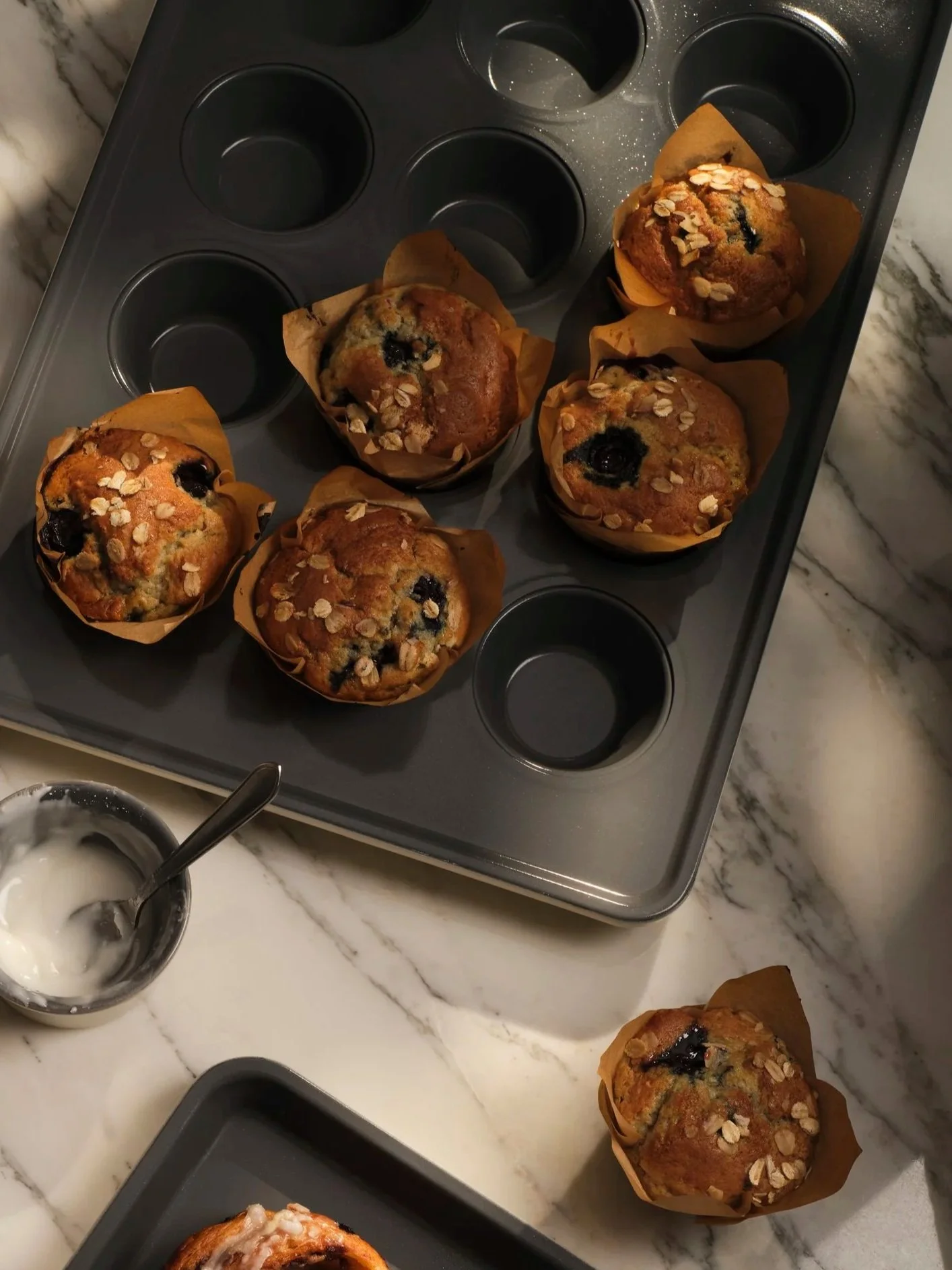
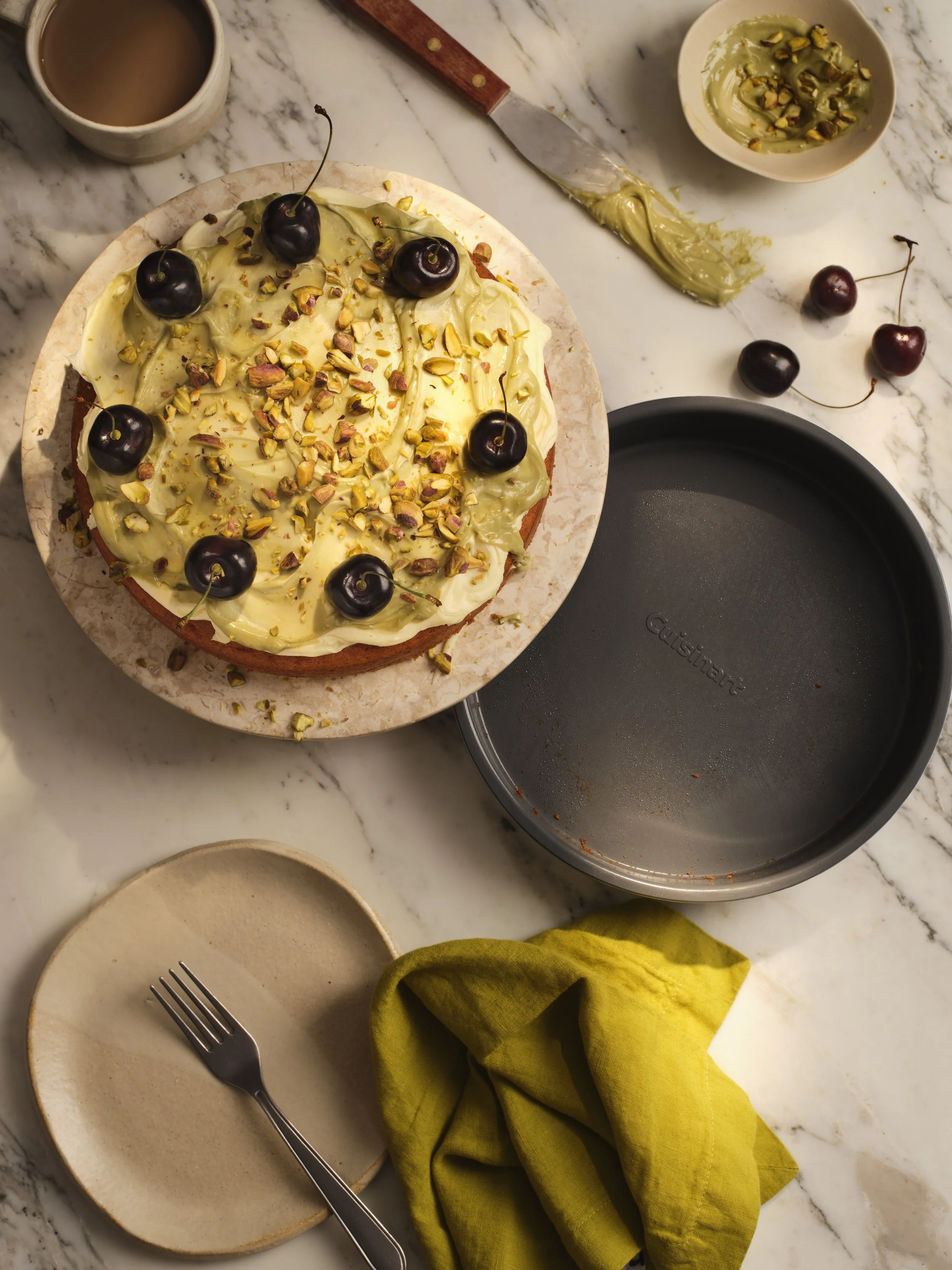
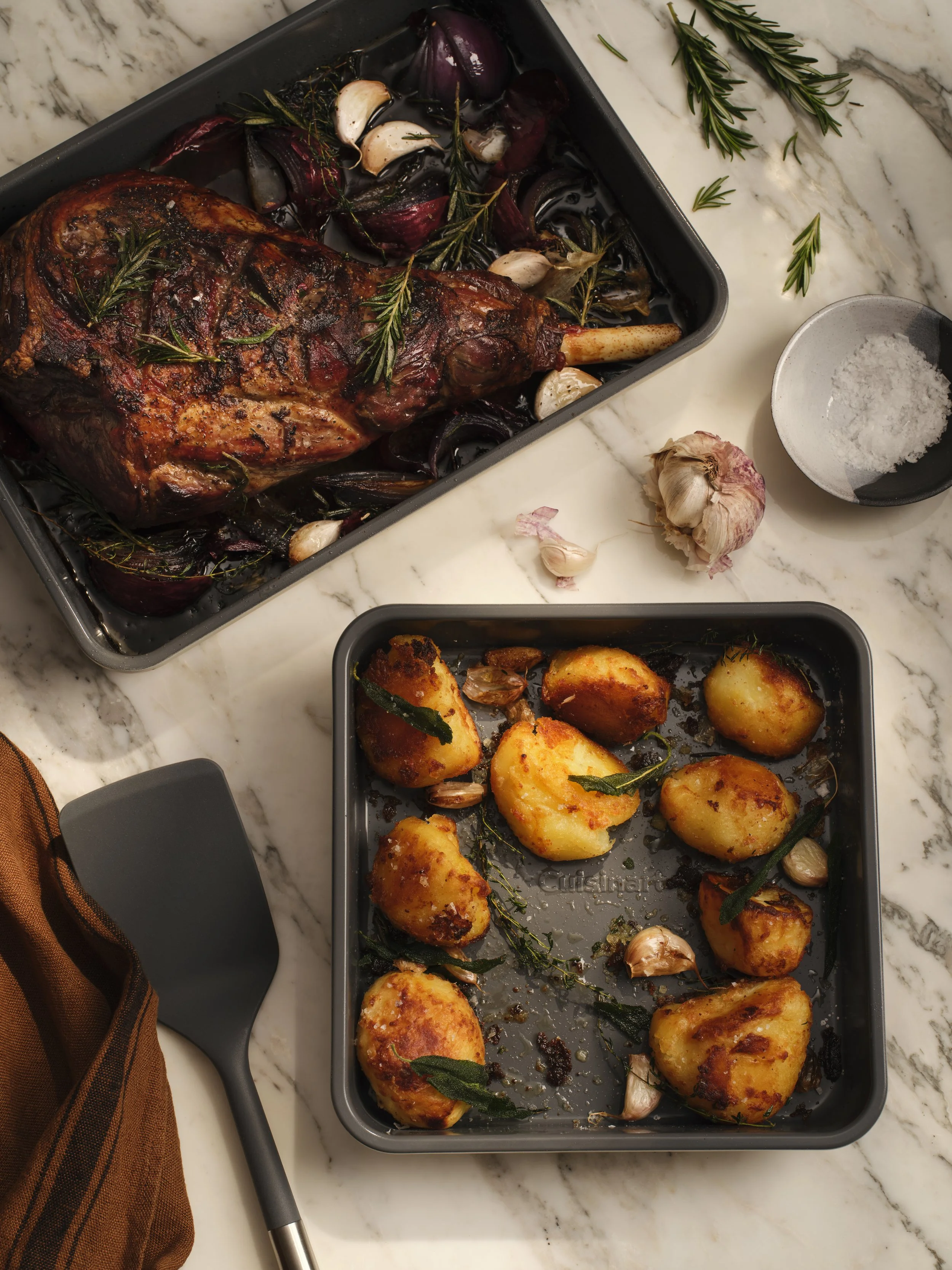

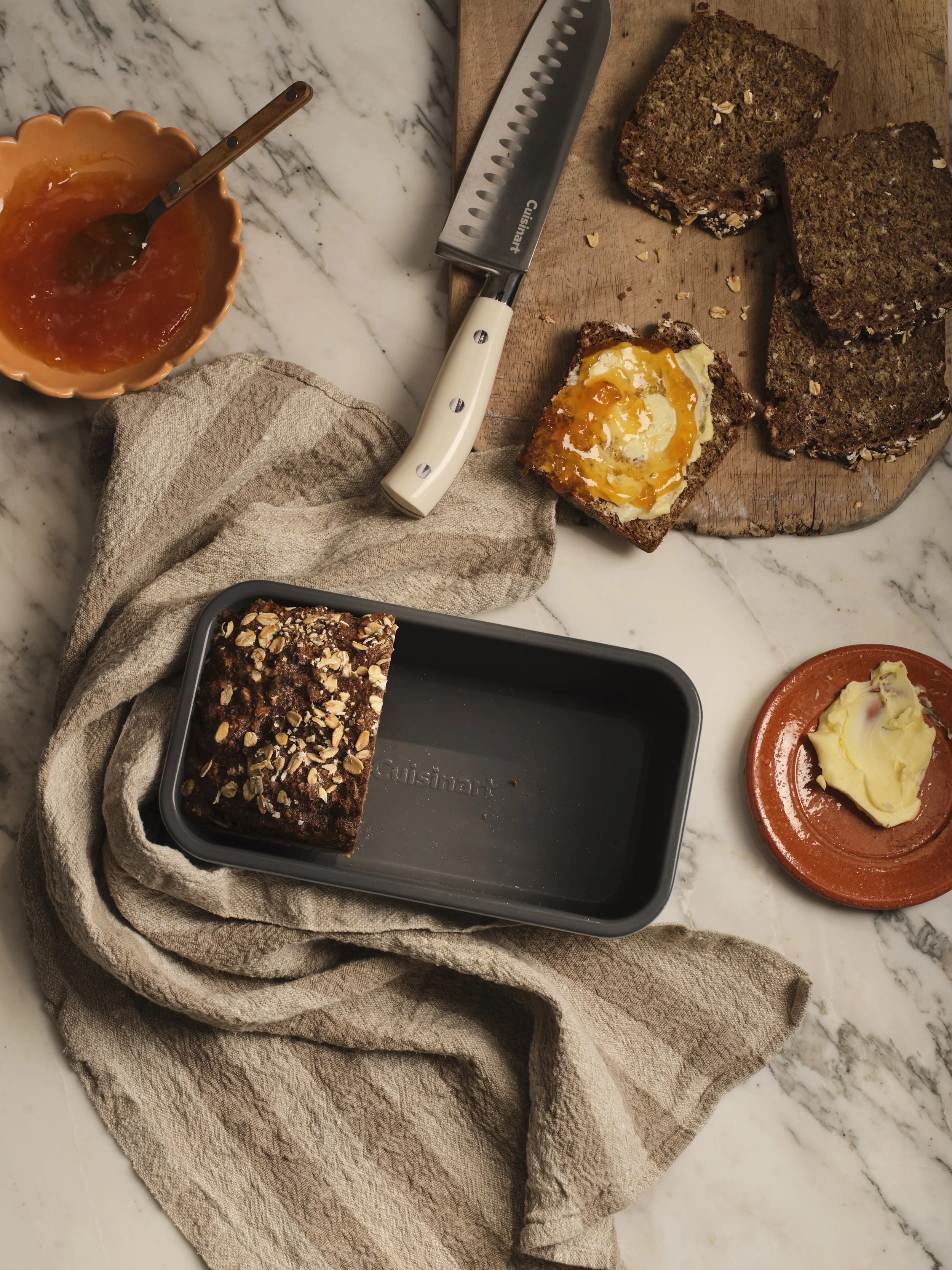

Make the most of your Cuisinart Bakeware with practical tips to achieve great baking results and keep your products performing at their best.
Bakeware Best Use Guide
Before Baking
➀ Quick Dip
Hand wash your bakeware with warm, soapy water to remove any dirt or debris left over from the manufacturing and shipping process.
➁ Clean as a Whistle
Wipe dry with a soft, non-abrasive dish towel to avoid scratching. The full top and bottom surface of your bakeware should be fully dry before being put in the oven.
➂ Skip the Seasoning
Ceramic comes naturally non-stick, so no need to season your bakeware.
➃ Ready for the Heat
Heat your oven to your desired temperature before adding in your bakeware. Avoid putting empty bakeware into the oven without any food on it.
➄ Friendly Fire
Your bakeware does not play well with open flames (stovetops, grills, campfires), so stick to only using in the oven.
During Baking
➀ Discover Your Winning Recipe
Our bakeware’s ceramic coating allows for even heat distribution. For your first few uses, closely monitor your heat setting to dial in on the perfect baking temperature or oven time and adjust recipes as needed.
➁ Line It Up
Our ceramic surface is designed for easy release when fully coated with flour, or a light amount of oil or butter, before food is added, per recipe instructions. For a speedy clean up, lining with parchment paper will also maintain its non-stick quality.
➂ Ditch the Sprays
Avoid oil sprays or cooking aerosols. Instead, use butter or liquid based oils to best preserve the slick coating.
➃ No Pointy Edges
Utensils with rough edges will damage your non-stick coating, so stick to soft wooden, silicone, plastic, or nylon products. Avoid using metal entirely. Do not cut baked goods while they are in the pan.
➄ Graceful Landing
Sharp metal edges may damage the exterior base coating, so place carefully on and off oven grates and stovetops.
➅ Too Hot to Handle
When placing your bakeware in or out of the oven, use a pot holder, oven mitt, or dishtowel as the pans and handles will get hot to the touch.
➆ Hot & Poppin’
It is normal for bakeware to slightly “warp” and make a popping sound in the oven due to the heat. Don’t worry—our bakeware’s reinforced rim will ensure it will flatten once cooled.
➇ Baked, Never Broiled
Not to be used under an oven’s broil setting, beyond 550°F, or in a microwave.
➈ All Fired Up
When you remove your bakeware from the oven, place your pans on the cork trivets provided to protect your kitchen countertops.
After Baking
➀ Time to Cool Down
Let your bakeware cool completely before running cold water over its surface to avoid thermal shock (meaning it might crack—yikes!). Your bakeware can withstand extreme temperatures on both ends of the spectrum, but sudden and significant changes can reduce their lifespan.
➁ A Handy Way to Clean
Our non-stick coating makes cleaning up by hand a breeze. Save time & water with a gentle scrub to keep your bakeware in optimal condition.
➂ Come Clean
Clean the cooking surface with warm, soapy water and a non-abrasive sponge or dishcloth until the pan is spotless before storing. For stains on the exterior of the pan, you may use a stronger sponge (we suggest a wool sponge) with a high-strength detergent.
➃ Breaking Bonds
If food gets stuck onto the surface, fear not! Cover the baking pan with 2 tablespoons of baking soda and 1 cup vinegar. Let the mixture sit for 30 minutes. This will release stuck-on food so that it can be easily wiped away. Once the mess is gone, wash the baking pan with mild dish soap.
➄ Browning Points
Similar to your favorite cast iron pan, browning is natural and bound to occur with regular baking and use (it builds character)—but it’s nothing some baking soda and vinegar can’t remove.
➅ Dry It Out
Dry with a soft, non-abrasive dish towel or place inside your bakeware storage to air dry completely.
➆ Load It Up
For storing, we recommend utilizing your storage caddies to keep your bakeware in top condition. If stacking, place towels, trivets, or a protective sheath between pan surfaces to minimise direct contact.